Pacific Northwest Institute

Democracy, community, and the long work of building durable institutions.

For much of the postwar era, democratic nations invested not only in treaties and markets, but in people, institutions, and shared civic life, laying the groundwork for decades of relative stability and cooperation.


That work was deliberate. It was sustained. And, for a time, it succeeded.

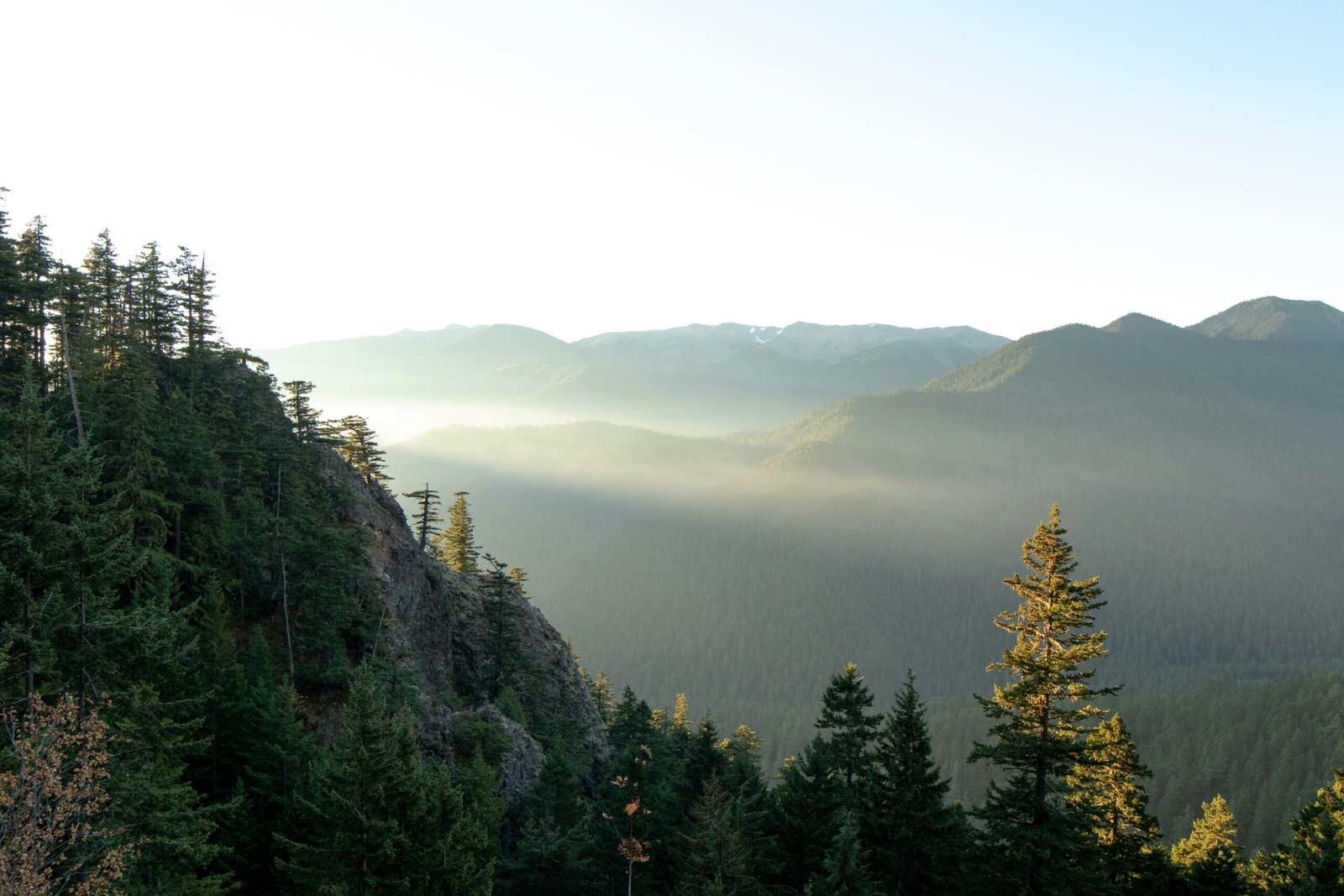
Hazy sunshine through threes on the Olympic mountains

At the same time, the informal networks that once connected people across governments, universities, and civic organizations have thinned. These relationships were rarely visible, and often difficult to measure, but they played a role in how coordination actually happened in practice. Their absence is not always obvious, but the effects accumulate.


What remains is uneven. Some relationships endure. Some institutions continue to function as intended. But the broader system that supported them feels less coherent than it once did, and less able to renew itself without deliberate effort.

The Idea


The premise behind this work is straightforward, but not simple in practice.

Peace, particularly between democratic societies, is not maintained by agreements alone. It depends on institutions that can absorb pressure over time, and on the people who operate within them. Those institutions do not maintain themselves. They require ongoing attention, and a form of stewardship that is rarely visible from the outside.

From the late 1940s onward, a substantial amount of effort was directed toward this problem. Across Europe and North America, governments, foundations, and civic organizations invested in institutional development, leadership networks, and sustained exchange between societies. Much of this work took place outside formal diplomacy, but it shaped how formal systems functioned.

The results were uneven, but in many cases durable. Over time, these efforts contributed to a level of stability and cooperation that, for a period, came to feel normal. It was not. It was constructed, maintained, and, in some cases, taken for granted.

Dungeness Schoolhouse Conference

The Work

The Pacific Northwest Institute emerged from a smaller, more local question.

If the earlier generation of work had relied on large institutions and international frameworks, what would it look like to begin again at a regional level, with a similar set of assumptions but far fewer resources?

The answer, at least in this case, was not a formal organization. It was a series of conversations, relationships, and working sessions among people who had spent time in different parts of the same system. Diplomats, academics, business leaders, journalists, and civic organizers, many of whom had participated in earlier efforts of one kind or another, came together to examine what still held and what no longer did.

Mountains and trees behind a lake. Photo by Reed Geiger on Unsplash
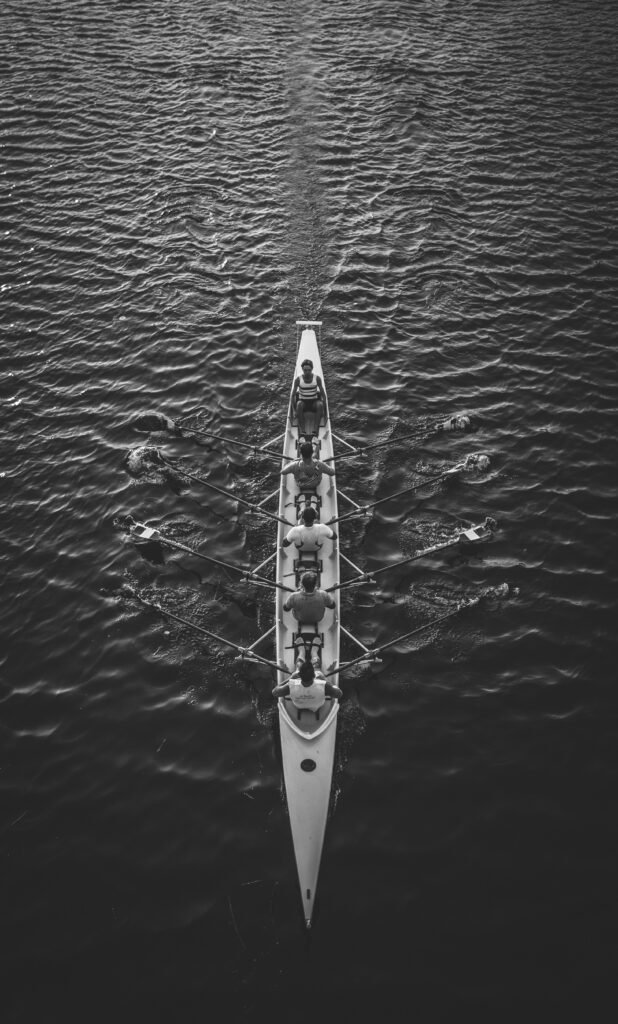
Rowers on the water. Photo by Matteo Vistocco on Unsplash
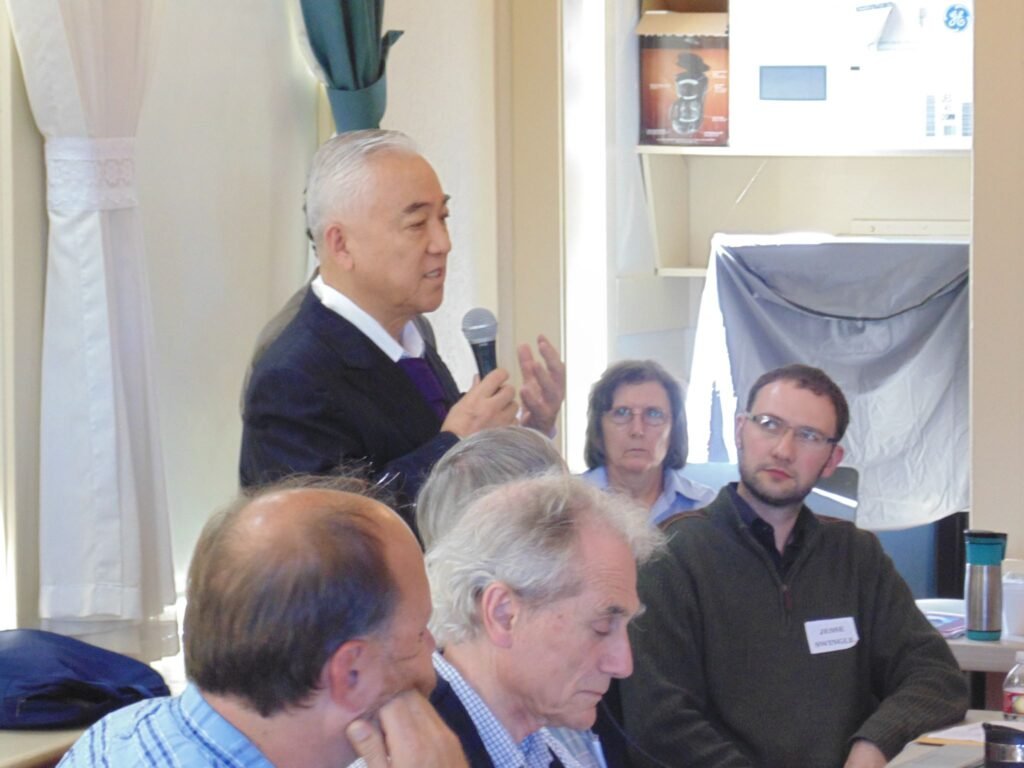
A gentleman speaks before a crowd at the Dungeness Schoolhouse Conference

Over time, the work took on a loose structure. There were convenings, some more formal than others, and a growing body of written material that attempted to translate broad ideas about democratic cooperation into something more concrete. Not a program, exactly, and not a think tank, but an attempt to understand how institutional strength might be rebuilt in a different context, under different conditions.

What held it together was less a shared agenda than a shared orientation. The assumption that institutions matter, that they do not maintain themselves, and that the work of sustaining them tends to happen in ways that are difficult to see from the outside.
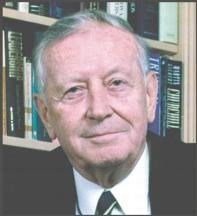
James R. Huntley

A Human Note

Near the end of his life, Jim was still doing the same work he had done for decades, though in a quieter form.

During one visit, he spoke briefly about his concerns for the direction of the world, but the conversation did not stay there for long. What held his attention was the opportunity to connect two people who did not yet know each other, but who shared a history that he believed mattered. He described their backgrounds, explained why the connection was worth making, and asked that it be carried forward.

It was a small act, but it was consistent with everything that had come before. The institutions he had helped build or support were large and often visible. The underlying work, in practice, often looked more like this.

Continuity


The conditions that made earlier efforts possible have changed, and in some cases deteriorated. The postwar consensus that supported long-term institutional investment is less stable than it once was. In many places, it has given way to shorter horizons and more immediate pressures.

At the same time, the basic dynamics have not disappeared. Institutions still require maintenance. Relationships still shape outcomes. And the absence of both tends to produce predictable results.

The work developed through PNWI, including a set of proposals, research materials, and network designs, reflects one attempt to think through these dynamics in a contemporary setting. It remains incomplete, but not unresolved.

This site exists as a record of that effort, and as a point of reference for those who may recognize the underlying problem and want to examine it more closely.

Se